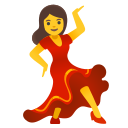
💃 (Woman Dancing) means celebration, excitement, or triumphant joy — "I'm so happy I could dance." It rarely refers to literal dancing. Tap to copy 💃. Most people send it as a reaction to good news, a win, or plans they're excited about.
Woman Dancing
Dancing Emoji 💃
The woman-dancing emoji: what it means in texts, how it differs from 🕺, and 12 combos worth stealing.
The red-dress dancer is the internet's default victory emoji. Sent once it means genuine delight; sent in a row (💃💃💃) it means the news is big enough to warrant a scene. Its Unicode name is Woman Dancing, but almost nobody uses it to describe an actual dance.
✍️ Written & reviewed against real usage · verified Unicode 16.0
Tap to copy · pastes in WhatsApp, Instagram, anywhere
Dancing emojis to copy & paste
These are the real emoji characters — tap one to copy it, then paste anywhere. Because they’re text, they show up as emoji wherever you send them.
Dancing & related emojis
Dancing combos
What the dancing emoji means
💃 is a reaction emoji, not a description. It answers news rather than narrating an event: a job offer, a passed exam, a Friday clock-out, a text back from someone you liked. The feeling it carries is uncontained joy — bigger than 😊, less chaotic than 🔥, and warmer than a plain 🎉 because it puts a body in the message. There's a second, quieter register: used alone after a small mundane win ("finally cancelled that subscription 💃") it's mildly ironic, treating a tiny thing like a triumph. Gen Z leans on that ironic read; millennials use it more sincerely. A third use is aesthetic — the red dress makes it shorthand for going out, nightlife, and flamenco or Latin dance specifically, which is why it shows up in Instagram captions with no celebratory meaning at all.
📱
In texts
The default reply to good news. One 💃 means genuine delight; three in a row means the news is big. It replaces typing a full congratulations.
🎵
On TikTok
Comment shorthand for 'this audio makes me move,' and the fastest way to react to a dance video without writing a caption.
📸
On Instagram
Caption tag for going-out photos — anything red, formal, or nightlife. Frequently the entire caption, no words attached.
💘
On dating apps
In a bio it signals 'I go out, I'm fun.' In chat it answers a plan suggestion with real enthusiasm — read it as a yes, not as flirting.
💼
At work
Survives in Slack where 🔥 or 💅 wouldn't. Safe for shipped features and Friday 5pm because it reads as harmless, sexless joy.
See it in real chats
How it lands in a real thread
I GOT THE OFFER 💃💃💃
STOP 🎉 I knew it. drinks on me
me walking out of that building at 4:59 exactly 💃🫡
the freedom dance is undefeated
Q. What does 💃 mean from a girl or guy?
When a girl sends 💃 she is almost always excited, not flirting. It's the most common reply to shared good news — hers or yours — and it reads as warm and unguarded, which is exactly why it isn't a flirt signal: flirting emoji tend to be restrained (😏, 👀), and this one is loud. If it lands in response to plans you suggested, it means yes and she's genuinely looking forward to it. The only romantic reading comes from context: 💃🕺 together implies "us, going out," and that pairing is deliberate. Solo 💃 is enthusiasm, full stop.
💃 vs 🕺 — which dancer to send
Woman Dancing 💃 and Man Dancing 🕺 look closely related and get swapped constantly, but they land differently in a message. Here is what separates them, so you send the one you actually mean.
💃
Woman Dancing
The general-purpose celebration emoji. Sincere by default, mildly ironic when attached to a tiny win. Works as a reaction to any good news, from any sender, on any platform.
vs
🕺
Man Dancing
Added six years later in a white-suit disco pose, so it carries a retro joke built in. It skews sillier — used to be goofy about celebrating rather than to actually celebrate.
How 💃 looks on every platform
It’s the same character everywhere — each platform just draws it in its own style. Here are three open emoji sets side by side, plus how your own device renders it:
💃
Your device
Twitter / X
Google (Noto)
OpenMoji
Platform
How it differs
Apple
A woman in a red flamenco-style dress mid-turn, one arm raised. The most detailed version and the reason the 'going out' read exists.
Google
Flatter and more stylized, red dress with a simpler silhouette. Less obviously formal, so the nightlife connotation is weaker.
Samsung
Red dress with a pronounced flare and a visible flower in the hair on older One UI versions — the most explicitly flamenco design.
Microsoft
Blocky, cartoon-style dancer in red. Reads as generic celebration rather than any specific dance style.
WhatsApp
Close to Apple's design, red dress and raised arm, so cross-platform messages between iPhone and Android keep the same tone.
Twitter
Twemoji's flat vector version: simple red dress, minimal detail. Small at comment size, which is why it often gets tripled on X.
Apple, Samsung and WhatsApp draw their own proprietary versions, which we don’t redistribute — the notes above describe how they differ. Open sets shown under their licences: Twemoji (CC-BY 4.0), Noto Emoji (Apache 2.0), OpenMoji (CC BY-SA 4.0).
When 💃 misses
The dancing emoji 💃 is not always read the way you intend it. These three situations change what 💃 signals, and knowing them keeps you from sending the wrong message.
It can read as dated. Some Gen Z users file 💃 with 🙌 and 🎉 as millennial-celebration emoji; on TikTok comments the ironic use is safe but sincere use can read slightly earnest.
It doesn't work as sympathy or hype for someone else's struggle. Sent to news that's only half-good ('I got the job but it's a pay cut 💃') it flattens the nuance and can feel dismissive.
Skin-tone modifiers change the read. 💃🏽 or 💃🏿 often signals identity or a specific dance tradition rather than generic celebration, so the default yellow-toned 💃 is the neutral choice for reactions.
Rendering varies more than people expect: Apple and Samsung draw a flamenco-style dancer in a red dress, while Google's is flatter and less obviously formal — the 'going out' aesthetic reading doesn't survive on every device.
Avoid it in serious professional contexts. It's fine in Slack for a shipped feature, but in an email to a client or on a condolence-adjacent thread it reads as tone-deaf.
Frequently asked
Quick answers to what people ask most about the dancing emoji 💃 — what it means in a text, who tends to send it, and how to copy it onto your own keyboard.
What does 💃 mean in texting?
💃 means celebration, excitement, or triumphant joy in texting — 'I'm so happy I could dance.' It's a reaction to good news rather than a description of dancing. Sent repeatedly (💃💃💃) it signals the news is genuinely significant.
What does 💃 mean from a girl?
From a girl, 💃 almost always means excitement about news or plans, not flirting. It's warm and unguarded, which is exactly why it isn't a flirt signal — flirting emoji tend to be restrained. Paired as 💃🕺 it implies going out together.
Is 💃 flirty?
No, 💃 is not a flirty emoji on its own. It reads as enthusiasm and celebration. The only romantic reading comes from pairing — 💃🕺 suggests 'us, going out' — or from surrounding context, never from the emoji by itself.
What is the difference between 💃 and 🕺?
💃 is Woman Dancing, added in Unicode 6.0 and drawn in a red dress; 🕺 is Man Dancing, added in 2016 in a disco pose. In practice 💃 is the general-purpose celebration emoji, while 🕺 skews jokier and more retro.
What does 💃 mean on TikTok?
On TikTok, 💃 in comments means the audio or the dance in the video makes the commenter want to move. It's also used ironically under mundane clips, treating a small everyday win as a full celebration.
Can I use 💃 at work?
Yes, in casual channels. 💃 is safe in Slack for shipped features, closed deals, and end-of-week posts because it reads as harmless joy. Avoid it in client emails, formal announcements, or any thread with bad news in it.
Does 💃 have a hidden meaning?
No. Despite occasional claims online, 💃 has no coded or secret meaning — no drug slang, no hookup signal. It means celebration, excitement, or literal dancing. Any other reading comes entirely from the words around it.
Related emoji guides
If 💃 came up in a conversation, these are the emoji people most often look up next — each one explained the same way, with meanings you can actually use and characters you can copy.