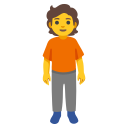
The 🧍 standing emoji means awkward silence — standing there with no reaction, no words, nothing to say. It shows a person facing forward with arms down, and is used after something embarrassing, cringe, or so confusing there's no response left to give.
Person Standing
Standing Emoji 🧍
Person Standing — the emoji for standing there with absolutely nothing to say.
Unicode calls it Person Standing, but almost nobody uses it literally. It's shorthand for a frozen, blank-faced reaction: you read the message, you have no comeback, so you send a little figure just standing there. Gen Z treats it as a complete sentence on its own.
✍️ Written & reviewed against real usage · verified Unicode 16.0
Tap to copy · pastes in WhatsApp, Instagram, anywhere
Standing emojis to copy & paste
These are the real emoji characters — tap one to copy it, then paste anywhere. Because they’re text, they show up as emoji wherever you send them.
Standing & related emojis
Standing combos
What the standing emoji means
🧍 is a reaction emoji, not a description of posture. It replaces text entirely — someone says something wild, embarrassing, or unanswerable, and you reply with a single standing figure to signal "I am processing this and choosing silence." The core reads are awkwardness (you waved at someone who wasn't waving at you), secondhand cringe (watching a friend embarrass themselves), being ignored or left out ("waiting for the group chat to respond 🧍♀️"), and deadpan defeat after bad news. It's the emoji equivalent of a sitcom cutting to a character standing alone in a doorway. The tone is self-deprecating far more often than critical, which is why it lands softly even in tense conversations.
💬
In texts
Sent alone as an entire reply. It means "I have no response to that" — after a joke that flopped, a wild confession, or being left on read. Softer and funnier than replying "ok".
🎵
On TikTok
Captions like "me at the function 🧍♀️" or "waiting for my order 🧍♂️." It marks the punchline of a relatable-awkwardness clip, and fills comments when a video ends with no payoff.
👻
On Snapchat
Used in streak replies when there's nothing to say — a photo of a ceiling plus 🧍 is a complete message. Also flags being ignored in a group snap without calling anyone out.
💘
On dating apps
Almost always about a lull, not attraction. 🧍♀️ after two days of silence is a polite nudge; sent after your own bad joke it's a preemptive apology for being awkward.
💼
At work
Fine in casual Slack for "waiting on approval 🧍" or "nobody responded in the meeting 🧍." Avoid it in client channels — it reads passive-aggressive if the person you're waiting on is in the thread.
See it in real chats
How 🧍 actually lands in a chat
so I waved at him across the room and he waved at the guy behind me
🧍♀️
and then I kept waving. for like four seconds.
🧍♀️🧍♀️🧍♀️ I have no words for you
Q. What does 🧍 mean from a girl or guy?
When a girl sends 🧍♀️ she's usually flagging her own awkwardness, not judging you. It reads as "I said something weird and now I'm standing here regretting it," or "I'm waiting on you and pretending it's fine." On dating apps it often follows a dry-texting stretch: 🧍♀️ after a long gap gently points out she's been left hanging without starting a fight. It can also mean she's the only one who didn't get the joke. Read it as soft, self-aware, and mildly impatient — not flirty, not angry.
🧍 vs 🚶 — frozen or leaving
Person Standing 🧍 and Person Walking 🚶 look closely related and get swapped constantly, but they land differently in a message. Here is what separates them, so you send the one you actually mean.
🧍
Person Standing
Stuck in the moment. No reaction, no comeback, no exit — you're still there absorbing it. Use after cringe, silence, or being ignored.
vs
🚶
Person Walking
Actively removing yourself. Signals "I'm out," giving up, or dodging a conversation. Use when you want to end the exchange, not sit in it.
How 🧍 looks on every platform
It’s the same character everywhere — each platform just draws it in its own style. Here are three open emoji sets side by side, plus how your own device renders it:
🧍
Your device
Twitter / X
Google (Noto)
OpenMoji
Platform
How it differs
Apple
A clean gender-neutral figure with a yellow face and blue-grey clothes, arms straight down. The flat, neutral stance is what makes the blank-reaction read work.
Google
Rounder and shorter with a chunkier body; reads slightly more childlike, which pushes the tone toward cute-awkward rather than deadpan.
Samsung
Taller and more stylised with visible shoes; on some older One UI builds the pose sits closer to mid-step, which blunts the standing-still joke.
Microsoft
Flatter, more illustrative Fluent-style figure. Recognisable on Windows but less expressive as a pure reaction emoji.
WhatsApp
Close to Apple's neutral figure. Renders fine on current versions, but older Android builds may split 🧍♀️ and 🧍♂️ into two separate symbols.
Twitter
Twemoji uses a simple flat figure with minimal shading. It reads small in-timeline, so people often double or triple it for visibility.
Apple, Samsung and WhatsApp draw their own proprietary versions, which we don’t redistribute — the notes above describe how they differ. Open sets shown under their licences: Twemoji (CC-BY 4.0), Noto Emoji (Apache 2.0), OpenMoji (CC BY-SA 4.0).
Where 🧍 gets misread
The standing emoji 🧍 is not always read the way you intend it. These three situations change what 🧍 signals, and knowing them keeps you from sending the wrong message.
It is not a "stand up for yourself" or motivational emoji. Sending 🧍 to encourage someone reads as you standing there doing nothing.
There is no sexual or secret coded meaning behind 🧍, despite occasional TikTok claims. It genuinely just means awkward silence.
Older phones and some Android builds split the gendered versions into 🧍 + ♀️, so 🧍♀️ can arrive as two mismatched symbols.
In work or family chats it can land as passive-aggressive — "still waiting 🧍" implies someone dropped the ball even when you didn't mean it.
Many millennials read it literally as "a person standing" and miss the joke, so it often falls flat with anyone over about 35.
Frequently asked
Quick answers to what people ask most about the standing emoji 🧍 — what it means in a text, who tends to send it, and how to copy it onto your own keyboard.
What does the 🧍 standing emoji mean?
The 🧍 standing emoji means awkward silence or having no reaction. It shows a person standing still with arms at their sides, and people send it alone as a full reply when something is cringe, embarrassing, confusing, or leaves them with nothing to say.
What does 🧍♀️ mean from a girl?
From a girl, 🧍♀️ usually signals her own awkwardness or that she's been left waiting. It means "I said something weird," "I'm standing here with no response," or a gentle nudge that you haven't texted back. It is not flirty and rarely angry.
Is 🧍 rude or passive-aggressive?
Usually not. The default tone is self-deprecating — the sender is mocking their own awkwardness. It only reads passive-aggressive when paired with waiting language, like "still here 🧍," in a chat where someone owes you a reply or a decision.
What's the difference between 🧍 and 🚶?
🧍 Person Standing means stuck, frozen, or waiting with no reaction. 🚶 Person Walking means leaving, moving on, or exiting a situation. One is paralysis, the other is escape — people pair them as "🧍 then 🚶" for giving up and walking away.
When was the standing emoji added?
Person Standing (U+1F9CD) was approved in Unicode 12.0 and released as part of Emoji 12.0 in 2019, alongside Person Kneeling. The gendered variants 🧍♀️ and 🧍♂️ and all five skin tone modifiers arrived at the same time.
Does 🧍 mean someone is being ignored?
Often, yes. One of its most common uses is marking being left out — no reply in a group chat, nobody laughing at a joke, or waiting on a text. It communicates "nobody responded to me" without accusing anyone directly.
Related emoji guides
If 🧍 came up in a conversation, these are the emoji people most often look up next — each one explained the same way, with meanings you can actually use and characters you can copy.