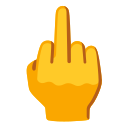
🖕 means flipping someone off. In texts between friends it is playful mock-anger, not real hostility. Sent cold in an argument, it is a straight insult.
U+1F595
Middle Finger Emoji 🖕
The rudest gesture in Unicode, and the one people use most affectionately
The middle finger emoji 🖕 means an offensive hand gesture, flipping someone off. Online it is usually playful mock-anger between friends, not real hostility, but sent to a stranger or mid-argument it reads as a genuine insult.
✍️ Written & reviewed against real usage · verified Unicode 16.0
Tap to copy · pastes in WhatsApp, Instagram, anywhere
Middle Finger emojis to copy & paste
These are the real emoji characters — tap one to copy it, then paste anywhere. Because they’re text, they show up as emoji wherever you send them.
Middle Finger & related emojis
Middle Finger combos
What the middle finger emoji means
Unicode calls 🖕 "reversed hand with middle finger extended" and it depicts exactly the gesture you think it does. What makes it confusing is that its real-world meaning and its texting meaning drifted apart. In face-to-face life the gesture is aggressive. In a group chat it has been worn smooth by overuse, so it now mostly functions as an affectionate insult, the emoji version of "shut up" or "I hate you" said with a grin. The tone hinges almost entirely on what sits next to it. With 😂 or 😭 it is a joke. With 🤬 or nothing at all, from someone who is already short with you, it is not. Two other signals matter: who sent it and whether the conversation was already tense. A close friend using it after you roasted them is banter. A coworker, an ex mid-fight, or a stranger in your replies is using it the way it was originally meant. It also supports all five skin tones, and some people pick a tone deliberately so it reads as "me doing this" rather than a generic symbol.
💬
In a text from a friend
Almost always affectionate mock-rage. It replaces "shut up" or "I hate you" after teasing, and usually arrives with a laughing emoji so nobody mistakes it for real anger.
💘
From a partner or crush
Flirty pushback after being roasted, called out, or told no. If it lands alone with no laugh emoji and short replies follow, the mood moved from playful to genuinely irritated.
📱
In TikTok comments
A punchline reaction to bait content, smug takes, or someone being obnoxious. Often stacked or paired with 🤡. Comments using it are sometimes auto-hidden by filters.
🚩
In an argument or work DM
Not a joke here. Aimed at a coworker, stranger, or ex mid-conflict it reads as a real insult and gets screenshotted as evidence in workplace and school complaints.
See it in real chats
How it actually lands in a group chat
you seriously ate the last slice
🖕😂
wow. blocked.
i left you the crust, be grateful 🙄
🖕🖕
Q. What does 🖕 mean from a girl or guy?
If she is a friend, 🖕 means she is laughing at you, not fighting you - it lands after you teased her and is the emoji equivalent of "oh shut up". From a girl you are talking to romantically it usually reads as flirty pushback, especially with 😂, 😭 or 💅 attached. The version to actually worry about is the bare 🖕 with no softener, sent after a real disagreement, followed by one-word replies or silence. That is not banter, that is her telling you she is done with the conversation. Read the two messages before it, not the emoji alone.
How 🖕 looks on every platform
It’s the same character everywhere — each platform just draws it in its own style. Here are three open emoji sets side by side, plus how your own device renders it:
🖕
Your device
Twitter / X
Google (Noto)
OpenMoji
Platform
How it differs
Apple
A pale, realistic 3D hand with the finger raised, palm facing out. Supports all five skin tones and is the render most people picture.
Google
Flatter cartoon yellow hand, slightly smaller finger, which reads as a bit less aggressive than Apple's version.
Samsung
Rounded yellow hand with a visibly bent thumb; older One UI versions drew it noticeably softer and more cartoonish.
WhatsApp
Renders normally in chats, but the emoji is missing from some regional keyboard layouts, so people paste it instead.
Twitter, X and web
Twemoji shows a simple flat yellow hand. Many older business tools and legacy Windows fonts still show a blank box instead.
Apple, Samsung and WhatsApp draw their own proprietary versions, which we don’t redistribute — the notes above describe how they differ. Open sets shown under their licences: Twemoji (CC-BY 4.0), Noto Emoji (Apache 2.0), OpenMoji (CC BY-SA 4.0).
Where 🖕 gets you in trouble
The middle finger emoji 🖕 is not always read the way you intend it. These three situations change what 🖕 signals, and knowing them keeps you from sending the wrong message.
It is one of the few emoji treated as evidence. Sent to a coworker, manager, teacher, or landlord it has been cited in real harassment and misconduct complaints - screenshots do not carry your joking tone.
Moderation systems flag it. Comments containing 🖕 are routinely hidden, shadow-filtered, or auto-removed on TikTok, YouTube and Instagram, and some brand accounts filter it by keyword.
It does not travel. In parts of the Middle East, South Asia and East Asia the gesture is read as flatly obscene with no playful register, so the friendly-banter meaning is a Western-internet thing, not a universal one.
Frequently asked
Quick answers to what people ask most about the middle finger emoji 🖕 — what it means in a text, who tends to send it, and how to copy it onto your own keyboard.
What does 🖕 mean in a text?
It means flipping someone off. Between friends it is playful mock-anger, roughly "shut up, I hate you" after being teased. From someone you are arguing with, or from a stranger, it is a genuine insult.
Is the middle finger emoji rude?
Yes, literally. It depicts an obscene gesture. Whether it is received as rude depends almost entirely on the relationship and the emoji next to it. With a laughing face it is banter. Alone and unprompted it is an insult.
What does it mean when a girl sends 🖕?
Usually she is laughing at you rather than fighting you, especially if she just got teased. Take it seriously only when it arrives bare, after a real disagreement, followed by short or no replies.
When was the middle finger emoji added?
It was approved in Unicode 7.0 in 2014 as part of Emoji 1.0, under the name Reversed Hand with Middle Finger Extended. Apple added it to iOS in 2015 with iOS 9.1.
Why can I not find 🖕 on my keyboard?
Some regions, carriers, and managed work devices ship keyboards with it removed, and a few third-party keyboards hide it by default. Copying and pasting the character works even when the keyboard hides it.
Can you get banned for using it?
A single use rarely triggers a ban, but platforms do filter or hide comments containing it, and repeated use aimed at a specific person can count as targeted harassment under most platform rules.
Related emoji guides
If 🖕 came up in a conversation, these are the emoji people most often look up next — each one explained the same way, with meanings you can actually use and characters you can copy.