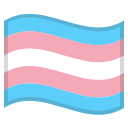
The trans flag emoji 🏳️⚧️ shows the transgender pride flag — light blue, pink and white stripes — and means the person is transgender, non-binary, or a visible ally. In bios it functions as an identity marker, not decoration, so people read it literally.
Transgender Flag
Trans Flag Emoji 🏳️⚧️
Copy the transgender flag, see what it signals in bios and DMs, and grab combos that actually get used.
Unlike most emoji, 🏳️⚧️ carries almost no ironic layer: when someone puts it in a display name, a TikTok bio, or a dating profile, they mean it about themselves or about who they support. It also does quiet work in group chats, where dropping it into a thread signals "this space is safe" without anyone having to make a speech.
✍️ Written & reviewed against real usage · verified Unicode 16.0
Tap to copy · pastes in WhatsApp, Instagram, anywhere
Trans Flag emojis to copy & paste
These are the real emoji characters — tap one to copy it, then paste anywhere. Because they’re text, they show up as emoji wherever you send them.
Trans Flag & related emojis
Trans Flag combos
What the trans flag emoji means
🏳️⚧️ is a white flag emoji joined to the transgender symbol ⚧️, and platforms render it as Monica Helms' 1999 flag: blue, pink, white, pink, blue. Its meaning in real messages splits three ways. First, self-identification — trans and non-binary people put it after their name or pronouns on Instagram, Discord, and dating apps so they don't have to come out in every conversation. Second, allyship — parents, teachers and friends use it the same way they'd wear a pin. Third, solidarity in the moment: it spikes on TikTok and X around legislation news, Trans Day of Visibility (March 31), and Trans Day of Remembrance (November 20), where it appears under posts as a one-character "I see you." It's rarely sarcastic and almost never random.
💬
Texting & DMs
Used as a one-character check-in — a friend sends it after you share news, meaning 'I'm with you.' Also drops into group chats to flag that a topic is being handled respectfully.
🎵
TikTok
Sits in bios and comment sections as identity shorthand. Spikes hard around legislation news and March 31. Creators also use it in captions so the algorithm surfaces posts to the right side of the app.
📸
Instagram
Most common in the display name next to pronouns, or in Story replies to trans creators. In Notes and highlights it works like a pin on a jacket — permanent, not situational.
💘
Dating apps
On Tinder, Hinge and Bumble it's a deliberate filter placed before the first message. Some users pair it with pronouns; others use it purely as an ally signal, so read the rest of the profile.
💼
Work & Slack
Appears in Slack display names and email signatures at companies with ERGs. Safe in an ally context; check your workplace norms before adding it to a client-facing channel.
See it in real chats
How it actually lands in a DM
btw I changed my name on everything today 🏳️⚧️
congrats!! sending the new one to the group chat or do you want me to
you can, saves me typing it 20 times
on it 🏳️⚧️🩷
Q. What does 🏳️⚧️ mean from a girl or guy?
If a girl has 🏳️⚧️ in her bio or username, take it at face value: she's telling you she's trans, non-binary, or firmly an ally, and she's put it there specifically so you already know before you message. On dating apps it's screening — she'd rather filter you out early than have the conversation later. In a text thread it's usually softer: support for a friend, a reaction to news, or agreement with something you said. What it is not is a flirt signal, and reading it as one is the fastest way to look like you weren't paying attention.
🏳️⚧️ vs 🏳️🌈 — which flag to send
Trans Flag 🏳️⚧️ and Rainbow Flag 🏳️🌈 look closely related and get swapped constantly, but they land differently in a message. Here is what separates them, so you send the one you actually mean.
🏳️⚧️
Trans Flag
Specific to transgender and non-binary identity. Use it when the person or topic is explicitly trans — coming out, name changes, trans-specific news, or an ally statement about trans people.
vs
🏳️🌈
Rainbow Flag
The broad LGBTQ+ pride flag. Use it for Pride month generally, queer community posts, or when you don't know or don't need to specify which identity is involved.
How 🏳️⚧️ looks on every platform
It’s the same character everywhere — each platform just draws it in its own style. Here are three open emoji sets side by side, plus how your own device renders it:
🏳️⚧️
Your device
Twitter / X
Google (Noto)
OpenMoji
Platform
How it differs
Apple
Renders as a waving cloth flag with soft folds, blue/pink/white stripes clearly separated. The stripes are visible even at message-bubble size.
Google
Flatter, flatter-poled design with crisp horizontal bands. Noto's version reads more like a graphic than a fabric flag, and colors are slightly more saturated.
Samsung
Waving flag on a grey pole; on older One UI builds the pink and white bands can blur together at small sizes on light backgrounds.
Microsoft
Fluent renders it flat and geometric. In older Windows apps that lack Emoji 13 support, the ZWJ sequence breaks into 🏳️ + ⚧️ side by side.
WhatsApp
Uses its own flag artwork with a visible pole shadow; identical meaning, but the stripes are narrower than Apple's.
Twitter
Twemoji shows a simple angled flag. On very old X/Twitter clients and some third-party apps it may still fall back to two separate glyphs.
Apple, Samsung and WhatsApp draw their own proprietary versions, which we don’t redistribute — the notes above describe how they differ. Open sets shown under their licences: Twemoji (CC-BY 4.0), Noto Emoji (Apache 2.0), OpenMoji (CC BY-SA 4.0).
Where 🏳️⚧️ gets misread
The trans flag emoji 🏳️⚧️ is not always read the way you intend it. These three situations change what 🏳️⚧️ signals, and knowing them keeps you from sending the wrong message.
Older devices and apps without Emoji 13 support split the ZWJ sequence into 🏳️ + ⚧️ — a white surrender flag next to a symbol, which reads as 'giving up' to anyone who doesn't know the sequence.
Don't use it decoratively. Unlike 🌈 or 🦋, it isn't a mood or an aesthetic; sprinkling it into unrelated posts reads as borrowing an identity for engagement.
In a reply to someone who has just posted about harassment or a death, a bare 🏳️⚧️ with no words can land as low-effort. Pair it with an actual sentence.
It is not interchangeable with 🏳️🌈. Using the rainbow flag when someone specifically identifies as trans is a common, noticeable slip.
Some regions restrict or filter this emoji, and a few workplace or school platforms strip ZWJ flag sequences entirely — check that it actually rendered before assuming it was received.
Frequently asked
Quick answers to what people ask most about the trans flag emoji 🏳️⚧️ — what it means in a text, who tends to send it, and how to copy it onto your own keyboard.
What does the trans flag emoji 🏳️⚧️ mean?
It means the transgender pride flag — light blue, pink and white stripes designed by Monica Helms in 1999. Used in bios and messages, it signals that the sender is transgender or non-binary, or that they're a visible ally showing support.
What does it mean if a girl has 🏳️⚧️ in her bio?
Take it literally: she is trans or non-binary, or she is an ally who wants that known upfront. On dating apps it's placed deliberately as a filter so people can self-select before messaging. It is not a flirting signal.
How do I copy and paste the trans flag emoji?
Tap or click the glyph 🏳️⚧️ to copy it, then paste anywhere. On iPhone and Android it's in the Symbols or Flags keyboard section under 'transgender flag'. On Slack and Discord, type the shortcode :transgender_flag: instead.
Why does the trans flag show up as two emoji?
It's a ZWJ sequence: white flag 🏳️ joined to the transgender symbol ⚧️ with an invisible joiner. Apps that predate Emoji 13.0 (2020) don't recognise the join, so they display both source characters side by side instead.
Is 🏳️⚧️ the same as the rainbow flag 🏳️🌈?
No. The rainbow flag represents the LGBTQ+ community broadly, while the trans flag specifically represents transgender and non-binary people. They're separate codepoints with separate meanings, and swapping one for the other is a noticeable mistake.
Is it okay to use 🏳️⚧️ if I'm not trans?
Yes, as an ally signal — that's a standard use in bios, email signatures and replies. What reads badly is using it as decoration on unrelated content, or implying it means you're trans when you aren't.
When do people post the trans flag emoji most?
Usage spikes on Trans Day of Visibility (March 31), Trans Day of Remembrance (November 20), during Pride month, and whenever trans-related legislation is in the news. Outside those windows it lives mostly in permanent bio placements.
Related emoji guides
If 🏳️⚧️ came up in a conversation, these are the emoji people most often look up next — each one explained the same way, with meanings you can actually use and characters you can copy.