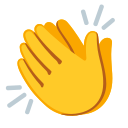
👏 means applause — praise, congrats, "you nailed it." But three in a row is a sarcastic slow clap, and a clap between every word means the sender is emphasising a point and is usually annoyed.
U+1F44F
Clap Emoji 👏
Applause, slow clap, or word-by-word emphasis — how 👏 actually reads in texts, TikTok comments and work chats.
The clap emoji 👏 means applause. One clap is sincere praise, three in a row reads as a sarcastic slow clap, and a clap between every word means the sender is emphasising a point and is usually irritated.
✍️ Written & reviewed against real usage · verified Unicode 16.0
Tap to copy · pastes in WhatsApp, Instagram, anywhere
Clap emojis to copy & paste
These are the real emoji characters — tap one to copy it, then paste anywhere. Because they’re text, they show up as emoji wherever you send them.
Clap & related emojis
Clap combos
What the clap emoji means
Unicode calls 👏 Clapping Hands: two open palms mid-strike with motion lines, added in Unicode 6.0 back in 2010. In practice almost nobody sends it to describe clapping. It is a tone marker, and the tone flips with the count. A single clap is straightforward praise, the emoji equivalent of "nice one" said quietly. Two or three claps together turn into the slow clap, the oldest sarcasm gesture there is, so 👏👏👏 after someone finally does the bare minimum is a dig, not a compliment. The third use is the clap as punctuation, dropped between every word to hammer a point home. That one came out of Black Twitter speech rhythms and spread everywhere, and it always carries impatience with it. Skin tone modifiers work on 👏, and platforms render it as two hands seen from the side, close enough across Apple, Google and Samsung that it rarely gets misread the way 🤌 or 🙌 do.
💬
In texts and DMs
One 👏 is warm and sincere. Three in a row (👏👏👏) reads as a slow clap, which is sarcasm. And 👏 dropped 👏 between 👏 every 👏 word means the sender is hammering a point home and is at least half annoyed.
📱
On TikTok and X
Comment sections use 👏 as the clap-back beat: word-by-word emphasis on a hot take. It also stacks under a dance, a cook or a plot twist to mean the creator ate. Rows of 👏 with no words is pure applause, no shade.
💼
At work and in Slack
The safest congrats emoji after 🎉. Managers use 👏 on wins, launches and shout-out threads. Keep it to one or two: a triple clap in a work chat can read as passive-aggressive even when you did not mean it that way.
🏟️
The literal meaning
Two open hands mid-applause, motion lines included. That is why it works for standing ovations, concerts, graduations and sports wins. Unlike 🙌, it is applause aimed at someone else, not celebration of yourself.
See it in real chats
How it lands in a group chat
I finally sent the email 😅
👏👏👏 took you three weeks but we got there
wow. sarcastic clap. noted
no it's a real clap!! I'm proud 🥹
then use 🎉 next time, the triple clap is a slow clap
Q. What does 👏 mean from a girl or guy?
From a girl, 👏 is almost always read the count, not the emoji. One clap after your news is sincere: she is proud of you and being a little understated about it. Two claps is warm hype. Three or more with nothing else attached is a slow clap, and that is sarcasm nine times out of ten, especially if you just did something she has asked you to do for weeks. If she claps between every word, like you 👏 could 👏 have 👏 texted, she is not applauding at all, she is annoyed and making sure the point lands. The friendliest version usually arrives with words or a partner emoji: 👏🥹, 🎉👏 or 👏🔥 are genuine. A bare row of claps with a flat message before it is the version worth apologising to.
👏 vs 🙌 — applause or celebration?
Clapping Hands 👏 and Raising Hands 🙌 look closely related and get swapped constantly, but they land differently in a message. Here is what separates them, so you send the one you actually mean.
👏
Clapping Hands
Applause aimed outward at someone else. You send it because another person did something. Can turn sarcastic when repeated, which 🙌 never does.
vs
🙌
Raising Hands
Celebration, hype or relief, usually about your own situation or a shared win. Reads as joy rather than judgement, and has no slow-clap sarcasm reading at all.
How 👏 looks on every platform
It’s the same character everywhere — each platform just draws it in its own style. Here are three open emoji sets side by side, plus how your own device renders it:
👏
Your device
Twitter / X
Google (Noto)
OpenMoji
Platform
How it differs
Apple / iOS
Yellow hands seen edge-on with three short motion arcs above. Skin tones supported. Renders slightly smaller than 🙌, which makes long clap strings look like a solid bar of yellow in iMessage.
Google / Android
Flatter, more head-on palms with curved impact lines on both sides. The Google version reads more clearly as applause than Apple's, so the sarcastic slow-clap reading depends more on count than on artwork.
Samsung
Rounder hands with a warmer gradient and shorter motion marks. Historically Samsung drew the palms further apart, which some users read as jazz hands, though recent One UI versions match the standard closely.
Twitter / X and Discord
Shortcode :clap: works on both. On X the clap is the default comment-section applause and the word-by-word format is native to the platform. Discord servers often add custom animated clap variants alongside it.
Slack and Teams
:clap: is a standard reaction for shout-outs and shipped work. Reaction claps are read as sincere because reactions are single by nature, so the sarcasm risk mostly lives in typed messages, not emoji reactions.
Apple, Samsung and WhatsApp draw their own proprietary versions, which we don’t redistribute — the notes above describe how they differ. Open sets shown under their licences: Twemoji (CC-BY 4.0), Noto Emoji (Apache 2.0), OpenMoji (CC BY-SA 4.0).
Where the clap emoji goes wrong
The clap emoji 👏 is not always read the way you intend it. These three situations change what 👏 signals, and knowing them keeps you from sending the wrong message.
Count changes the tone completely. One 👏 is kind, three is a slow clap. There is no way to mark a long string of claps as sincere, so add words or 🎉 when you actually mean congratulations.
Word-by-word clapping reads as condescending to a lot of people, and it has a specific cultural origin in Black Twitter speech patterns. Used carelessly in a work thread or with a stranger it lands as lecturing, not emphasis.
It has no volume or reaction on its own. A clap under bad news, a memorial post or a complaint reads as mocking, because applause implies a performance just ended. Swap to 🙏 or plain words in those threads.
Frequently asked
Quick answers to what people ask most about the clap emoji 👏 — what it means in a text, who tends to send it, and how to copy it onto your own keyboard.
What does the clap emoji mean from a girl?
Usually genuine praise or congratulations, especially as one or two claps after your news. If she sends three in a row with no other text, or puts a clap between every word, read it as sarcasm or frustration rather than applause. Tone comes from the count, not the emoji.
Is the clap emoji sarcastic?
It can be. A single 👏 is sincere. Repeated claps mimic a slow clap, which is the classic sarcastic gesture, and word-by-word clapping is an internet convention for lecturing someone. Context and count decide it, so pair a sincere clap with words or a 🎉 to remove doubt.
What is the difference between 👏 and 🙌?
👏 is applause directed outward at someone else's achievement. 🙌 is raising hands, which reads as celebration, hype or relief about your own situation, and in some communities as praise. Use 👏 to congratulate, 🙌 to celebrate alongside someone.
Why do people put the clap emoji between every word?
It imitates clapping on each syllable to emphasize a point, a speech pattern that spread from Black Twitter into wider internet use. It signals the writer thinks the point is obvious and is tired of repeating it, so it usually carries impatience with it.
What is the clap emoji unicode and shortcode?
It is U+1F44F, officially named Clapping Hands Sign, added in Unicode 6.0 in 2010 and Emoji 1.0 in 2015. The shortcode is :clap: on Slack, Discord, GitHub and most platforms. It also supports the five Fitzpatrick skin tone modifiers.
Is the clap emoji rude to send at work?
One or two claps are standard and friendly in work chats. Long strings of claps, or clapping between words, can read as condescending to colleagues even if you meant enthusiasm. Stick to a single 👏 or switch to 🎉 for launches and wins.
Related emoji guides
If 👏 came up in a conversation, these are the emoji people most often look up next — each one explained the same way, with meanings you can actually use and characters you can copy.